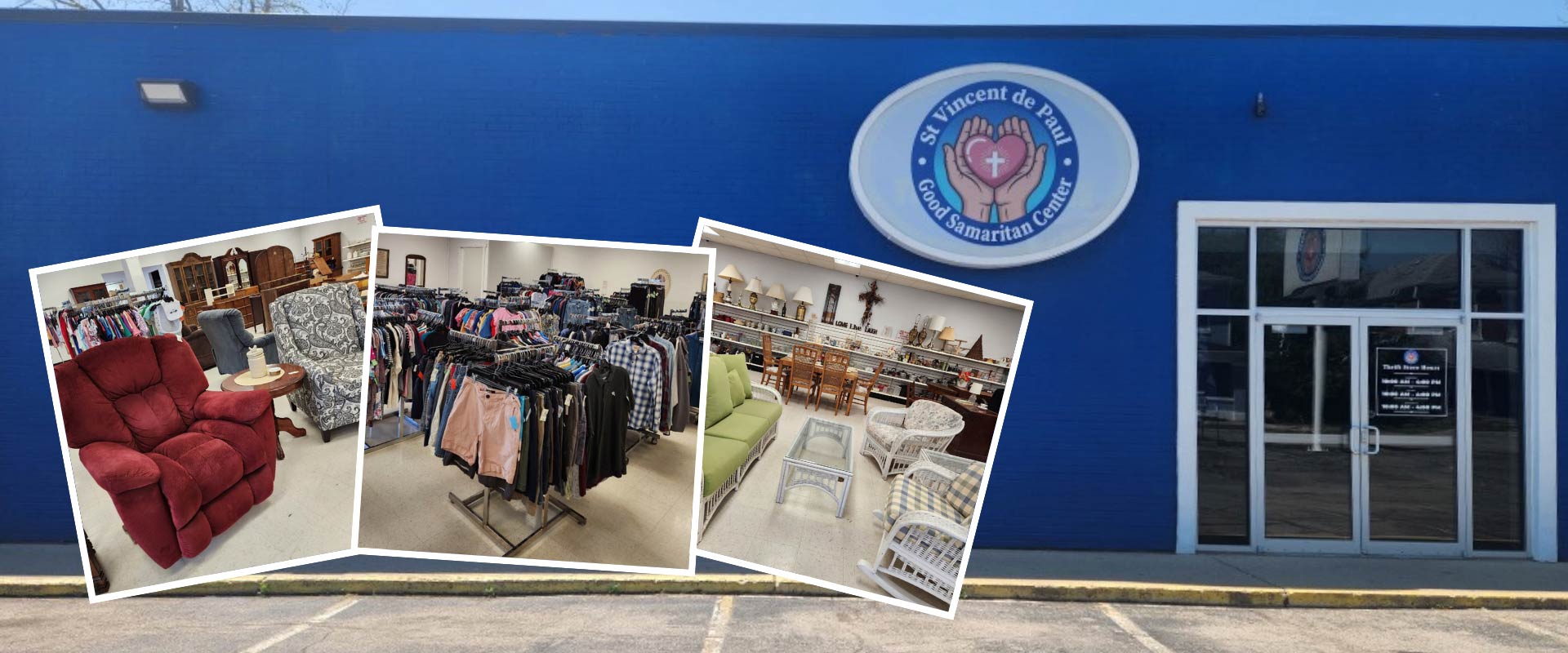
A couch can fill an empty room. A bed can help a child sleep. A table can bring a family together. But at the Tri-County Good Samaritan Center in Richmond, those items go beyond meeting a need in the moment. The center aims to help people build a better future.
The Tri-County Good Samaritan Conference—the only Conference in the East District outside of Indianapolis—is evolving its longtime furniture ministry into deeper, more lasting support. What was mostly transactional is becoming relational, now combining practical help with conversations, goal-setting and support to guide neighbors from crisis and dependence toward stability and independence.
A New Chapter for a Longstanding Ministry
Open to the public Thursday through Saturday, the Good Samaritan Center offers furniture, household goods and clothing in a welcoming setting that gives people dignity and choice. Early results have been strong, with the center already doubling its revenue goal.
Tony Talbert, President of the Tri-County Good Samaritan Conference, reflects on the transformation: “This isn’t just about providing furniture or clothing—it’s about restoring hope and dignity. We want every neighbor to know they are valued and capable of building a better future.”
Moving From Transactional Help to Relational Support
The home visitor program is the heart of the thrift store’s new approach. That is why Tuesday and Wednesday are reserved for those served by the home visitor program. These visits are not rushed. They are built around listening, learning and helping each neighbor tell their story.
Before visiting the store, volunteers spend about an hour with each household discussing needs, income, expenses and future hopes. Based on each situation, they determine store credit, usually $200–$400. Volunteers also help neighbors set two 90-day goals and one five-year goal, shifting the conversation from “What do you need today?” to “What life are you trying to build?”
Practical Help That Leads to Progress
Because a neighbor’s needs are rarely one-dimensional, the center is also building a network of support that helps neighbors take practical steps forward. That includes:
- Budgeting classes with Natco Empowerment Center to help families manage money and build stability
- Parenting classes in partnership with groups such as Firefly, especially for those working through family challenges or foster care issues
- Cooking on a budget classes that teach practical meal planning, smart shopping, and how to stretch food dollars
These programs not only address immediate needs but also equip neighbors with the skills and confidence to achieve long-term success.
Additionally, a visioning committee is exploring what programs could come next. Possibilities include:
- GED support
- Rental assistance
- Expanded life-skills programming
If you’re inspired by the center’s mission and want to make a difference, reach out to Talbert to learn how you can contribute—whether through volunteering, donating or spreading the word.